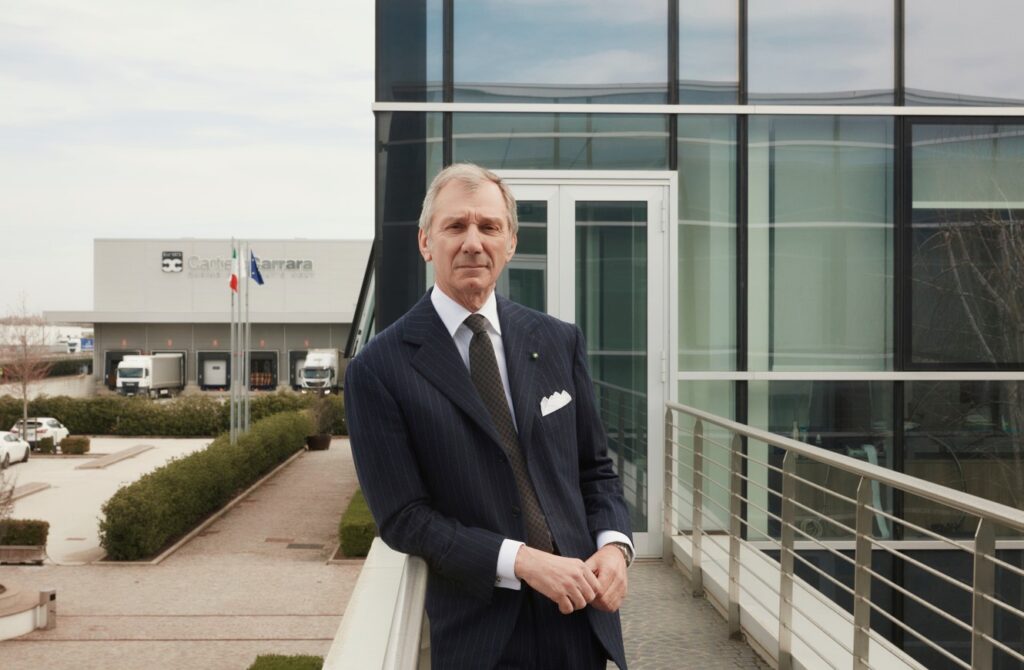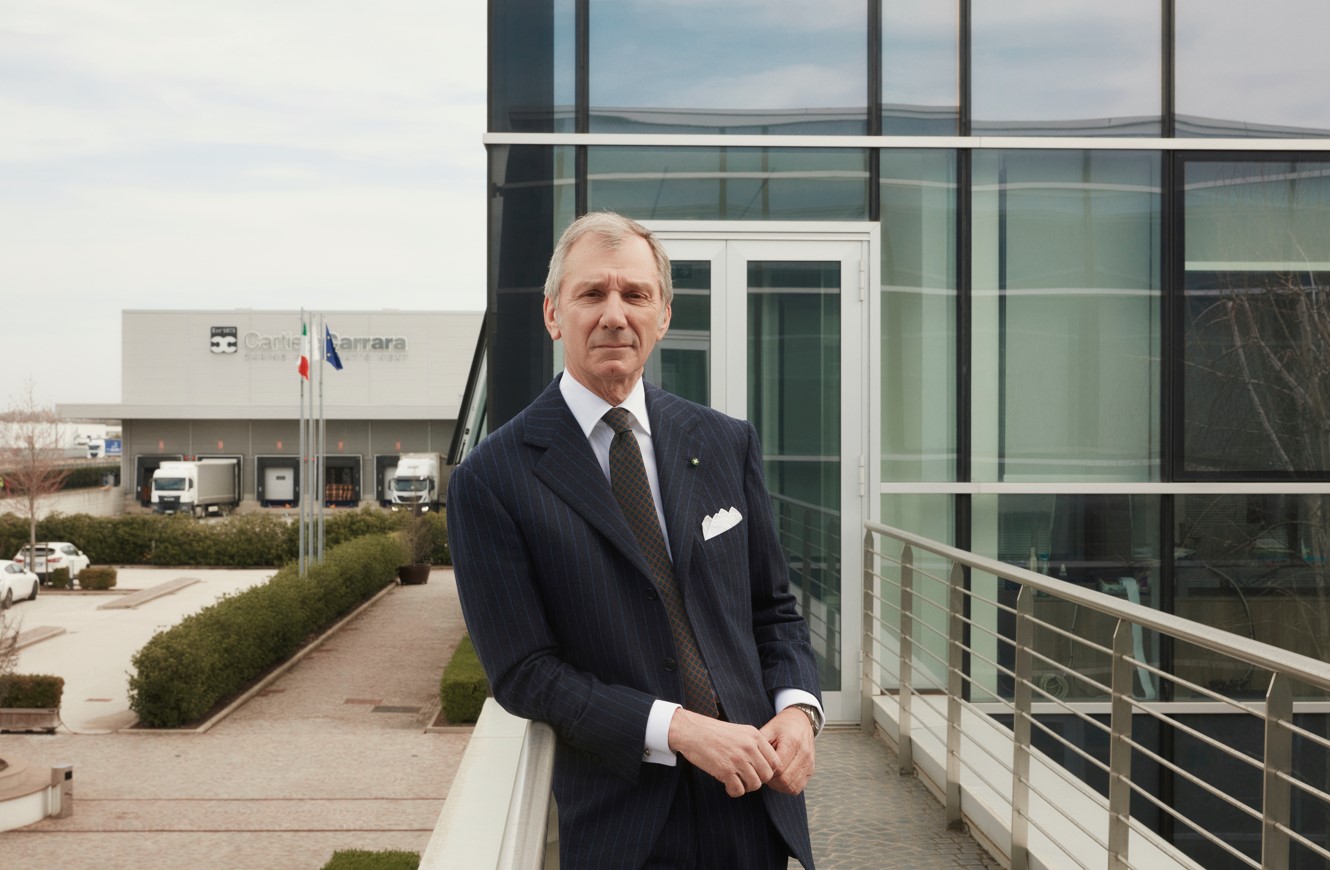
Corriere della Sera – L’Economia features Cartiere Carrara and its growth journey in an in-depth article based on an interview with the company’s President, Cav. Lav. Massimo Carrara.
From the Carrara family’s entrepreneurial history to its international growth prospects, the interview looks back at some of the key milestones that have shaped the company’s development and considers the challenges facing the tissue industry in the years ahead.
One of the central themes is the strengthening of Cartiere Carrara’s presence in international markets. In the United Kingdom, where the company already has established commercial operations, production at the newly acquired site is expected to begin in the first quarter of 2027. This represents a further step in Cartiere Carrara’s international growth journey, as the company also explores new development opportunities across Europe.
The interview also places considerable emphasis on sustainability as an integral part of the company’s industrial strategy: from the efficient use of resources and investments in cogeneration and photovoltaic energy to the use of certified raw materials and reforestation projects developed in areas close to its production sites.
A vision summed up by Massimo Carrara:
“It is one thing to make a sustainable product; it is another to ensure that it is also made sustainably.”
Sustainability, innovation and the ability to invest are therefore all part of the same vision: to continue improving the quality and performance of the company’s offering, strengthening its competitiveness and creating the foundations for the growth of future generations.
Read the full interview with Massimo Carrara in Corriere della Sera – L’Economia, published on 31 August 2026.
Cartiere Carrara: international growth, sustainability and innovation
The historic family-owned company from Pistoia will begin production in the UK in 2027. President Massimo Carrara: “We are also looking at France and Spain”. The company’s commitment to sustainability, both at its production sites and across the local area.
By VALERIANO MUSIU
A part of Italy’s paper district is expanding into the UK. The announcement comes from Massimo Carrara, President of Cartiere Carrara: “At the beginning of this year, we acquired a paper mill in the United Kingdom. According to our timetable, production is expected to start in the first quarter of 2027, complementing the commercial operations already established in the country.”
It is the first of a number of potential investments — “we are also looking at France and Spain”, Carrara says — that will contribute to the international expansion of one of Europe’s leading tissue paper manufacturers, producing paper for toilet rolls, napkins, tissues, kitchen towels and other applications.
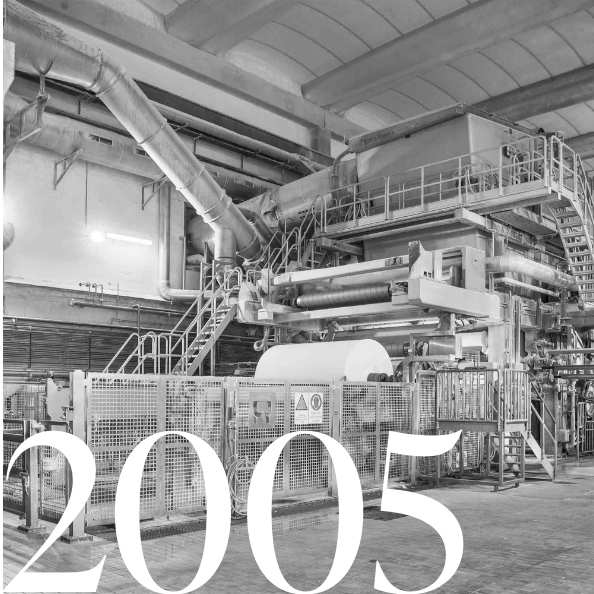
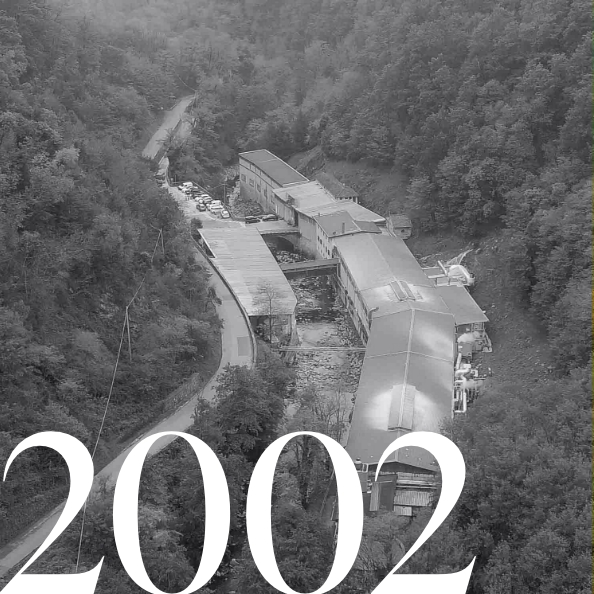
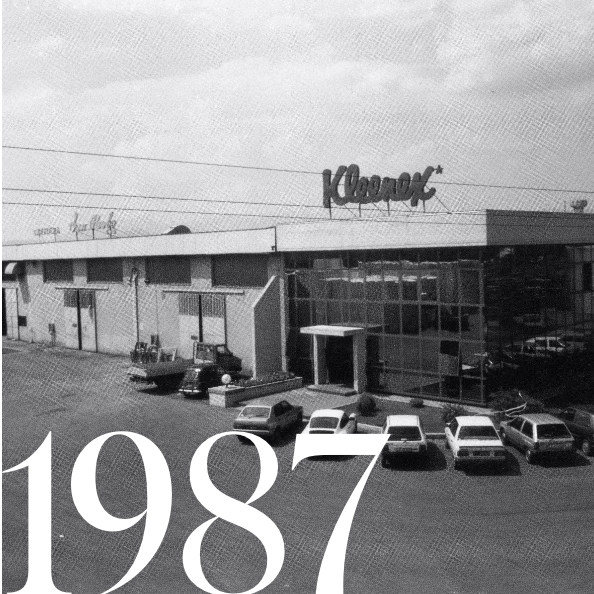
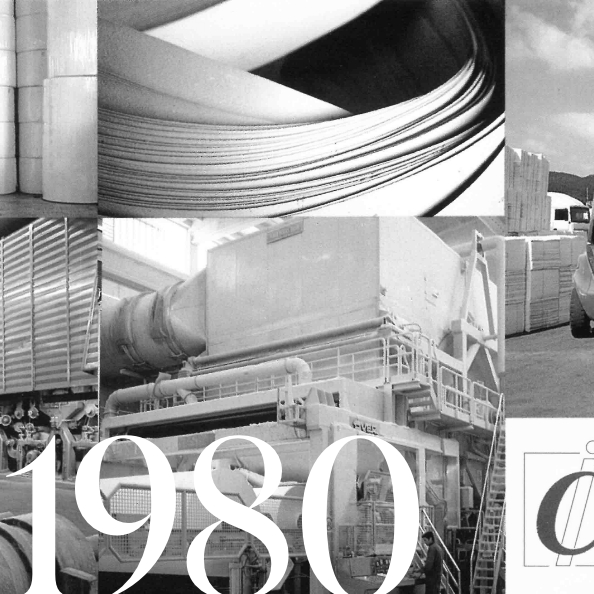
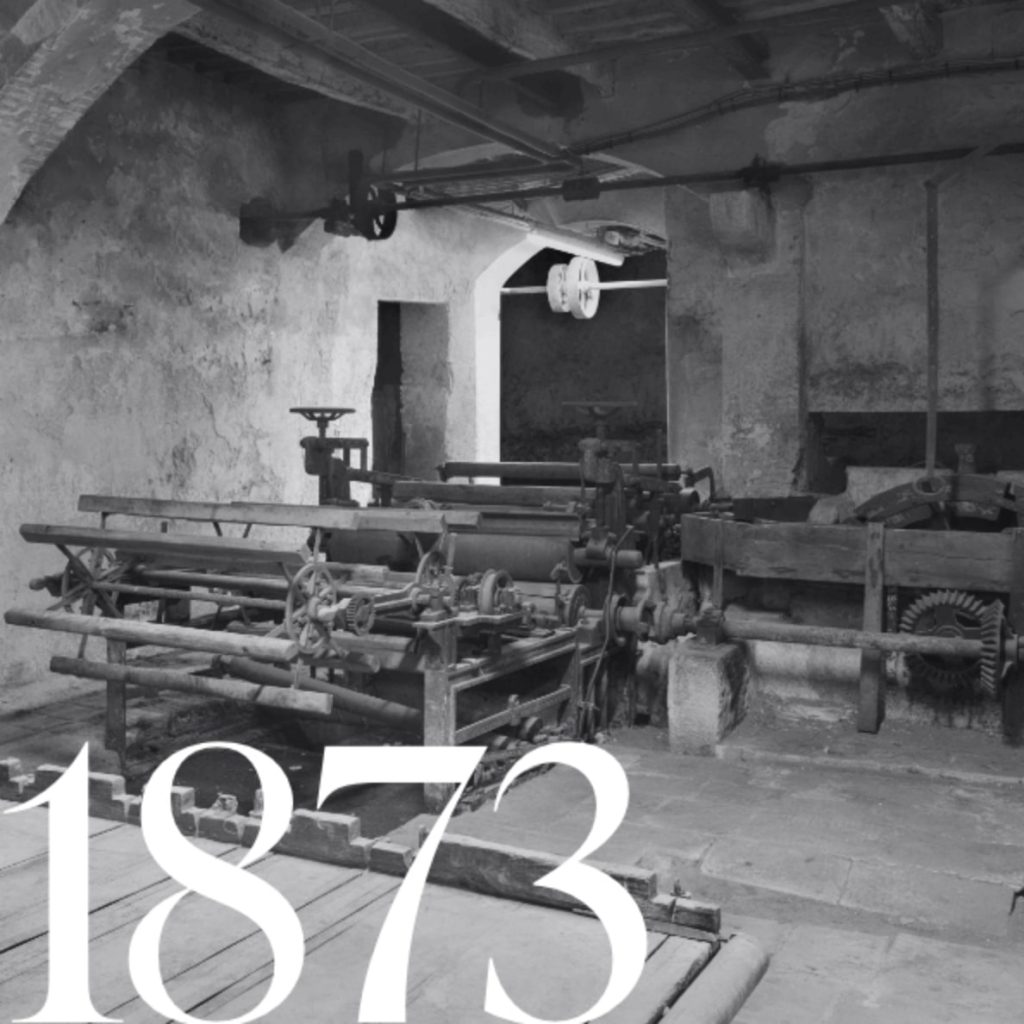
The company’s history can be divided into three distinct chapters: the beginning of operations in 1873, with the production of straw paper; the subsequent expansion and sale, in 2002, to the Swedish multinational Svenska Cellulosa Aktiebolaget (SCA); and finally, three years later, its rebirth, when Massimo Carrara, together with his brothers Marco and Maurizio, decided to start again from a small paper mill that had remained in their ownership.
Twenty years later, the President of Cartiere Carrara considers that gamble to have paid off: “Before the sale, we were Europe’s fourth-largest tissue producer; today we are sixth. In two decades, we have regained our position in a highly competitive market,” he explains.
In 2025, Cartiere Carrara recorded consolidated revenue of €465 million and exports 45% of its production to more than 50 countries.
Yet the challenges are considerable, ranging from strong international competition — particularly from Turkey — to new European regulations and high costs.
“The price of energy in Italy puts us at a disadvantage compared with other European operators. And,” Carrara continues, “the proposed revision of the ETS, the European Union Emissions Trading System, is entirely inadequate. Today, the ETS cost we pay on the semi-finished products we manufacture is equivalent to 3.5% of our revenue. Without serious reform, the system risks becoming unsustainable.”
There is one key lever for addressing all these challenges: sustainability.
It is a strategy that Cartiere Carrara, a participant in the United Nations Global Compact, has pursued from the outset.
“It is a journey we have built one step at a time, but it has also been a matter of survival: when you manufacture commodities in a competitive market, sustainability is the only way to optimise costs. Every resource saved through sustainability also represents a saving for our business.”
This focus on sustainability is integrated throughout the entire production process.
“We are probably the company in the tissue sector with the lowest water consumption. We were also among the first to invest in cogeneration, which enables us to generate between 90% and 95% of the electricity we consume. We will soon reach ten megawatts of photovoltaic capacity, which will cover the entire electricity consumption of our converting facilities, where the product is transformed.”
Another fundamental factor is the raw material.
“Today, recycled fibre accounts for around 8% of our production. But our approach to sustainability also extends to virgin fibres: all the pulp we use is certified according to PEFC and FSC standards, which ensure responsible forest management.”
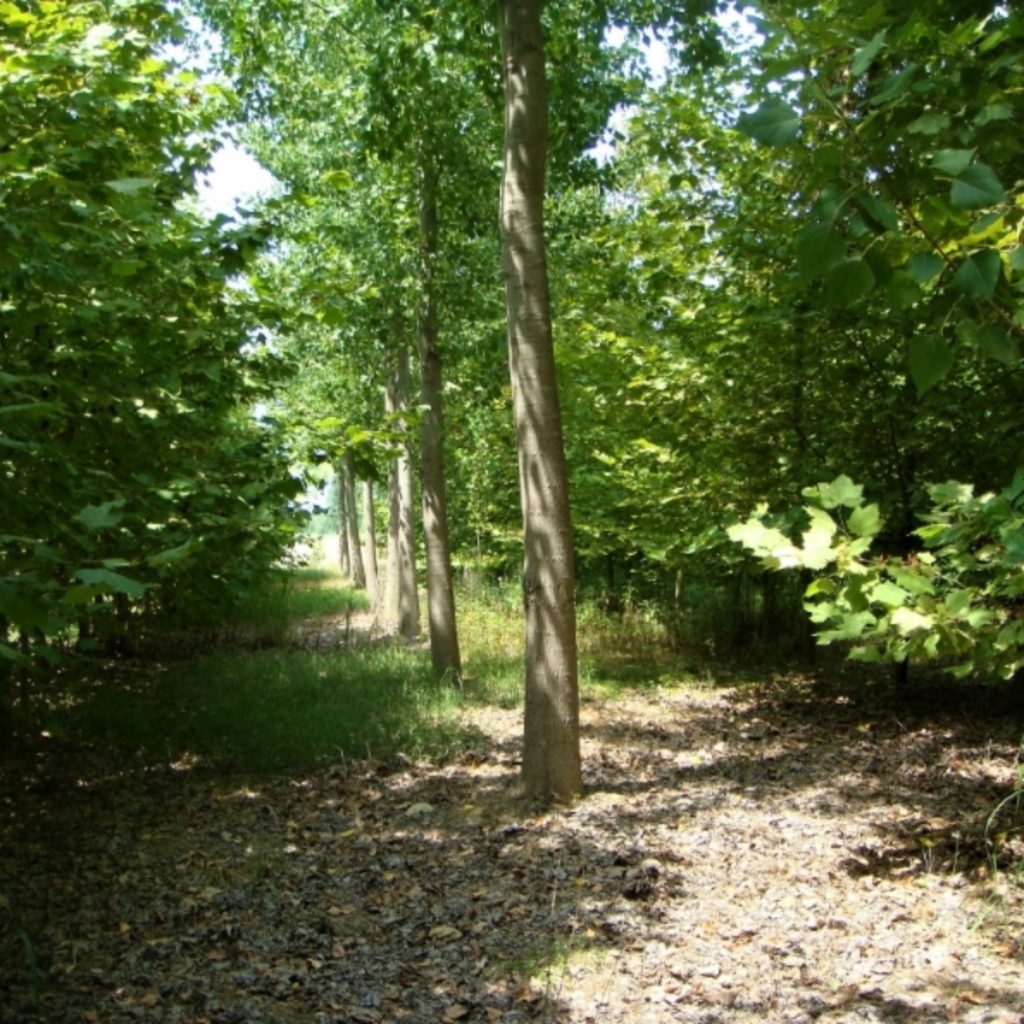
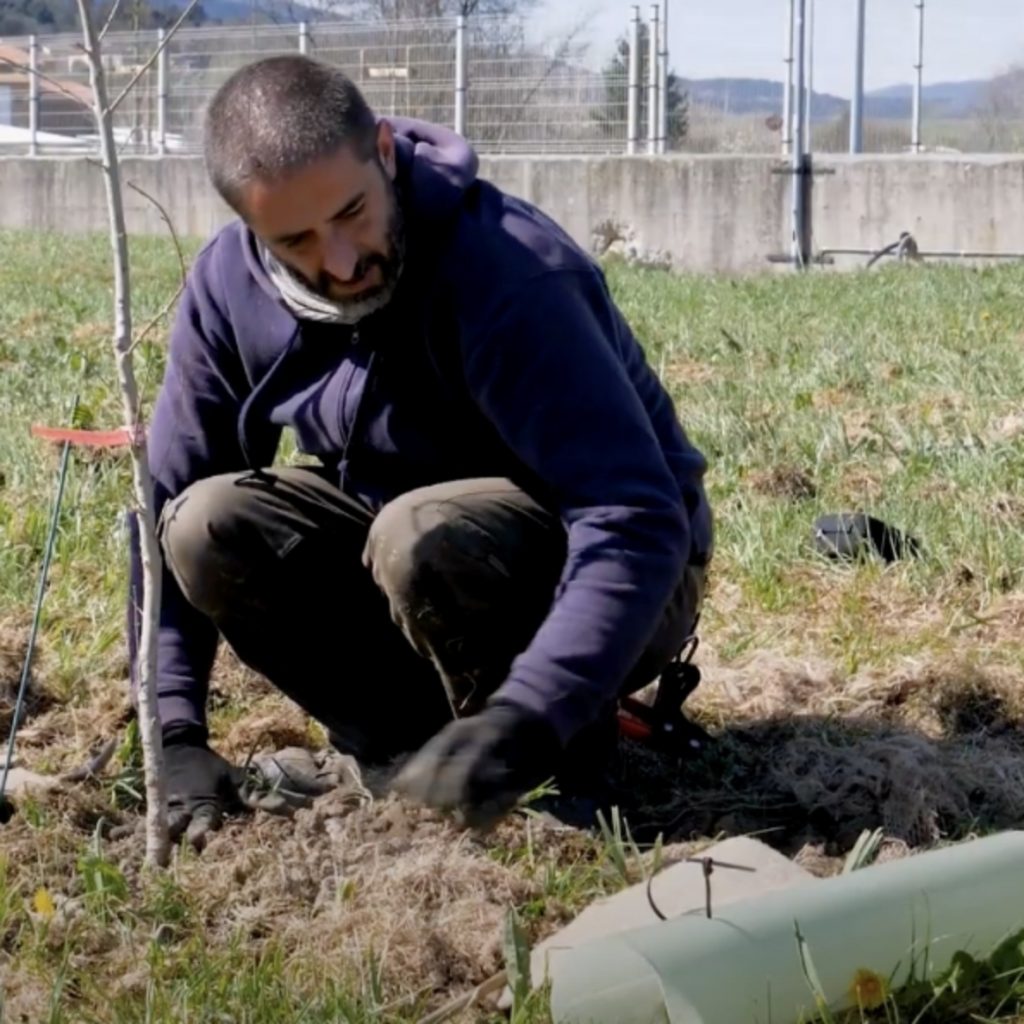
In 2020, the company also launched two reforestation projects in areas close to its production sites: a way of giving something back to the Lucca area, where Cartiere Carrara has always operated.
Massimo Carrara sums up the company’s philosophy as follows: “It is one thing to make a sustainable product; it is another to ensure that it is also made sustainably.”
The same principle applies to technological innovation, supported by a pilot plant.
“At the time, it was an investment that almost exceeded what we could afford, but it proved worthwhile: it allows us to carry out a great many tests and continuously improve the performance of our products.”
And it is precisely this commitment that Carrara hopes to pass on to future generations:
“From my children to my grandchildren, I hope the mission remains the same: to continue improving the quality of what we offer.”